 The Merchandise Guide
Books
Compiled by Martin Willey
The Merchandise Guide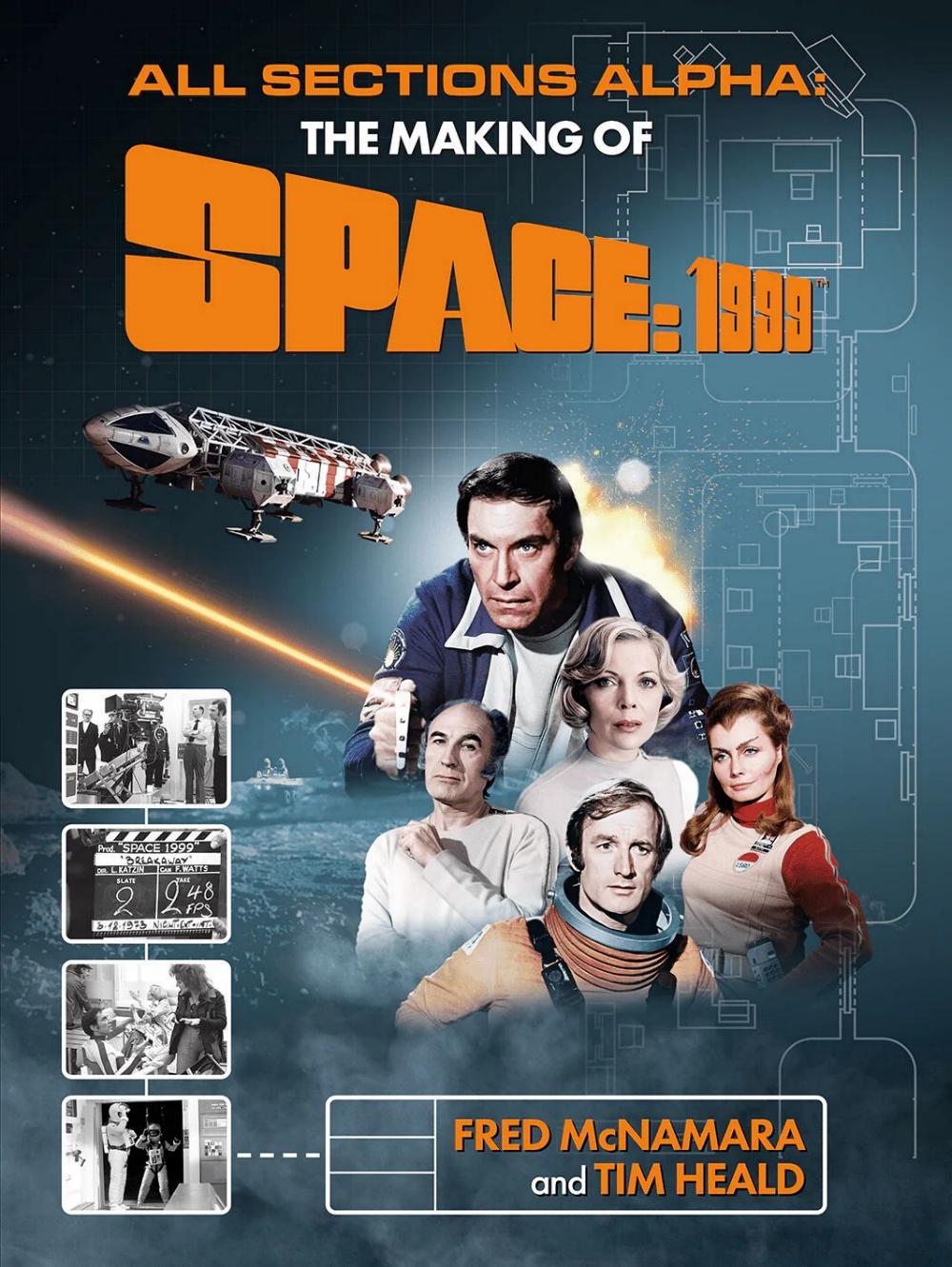
Anderson Entertainment, UK, 12 August 2026 (was winter 2025, 31 January 2026)
334 pages, hardcover, 270 x 230 mm, £27.99
This is an expanded version of The Making of Space: 1999 by Tim Heald (Ballantine, 1976).
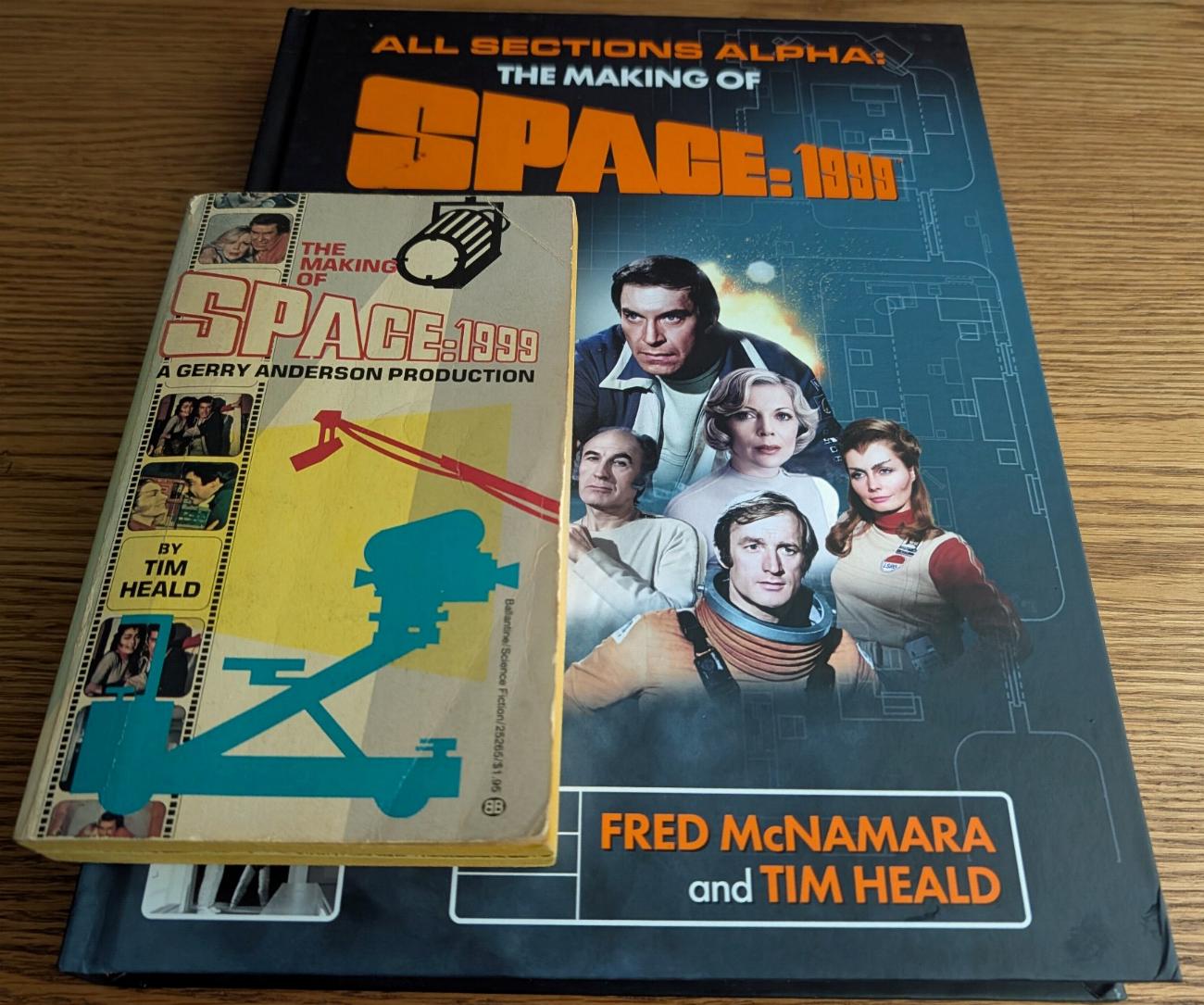
This is a large hardback, very different in format to the original paperback. There are colour photographs throughout the new book, but the original only had a 32 page black and white photo section. Many of those black and white images of models, shot specifically for the book in 1976, still exist in the ITV photo archives, but are not included here. Similarly, the storyboards in the original photo section still exist, in colour, and inexplicably they are not included.
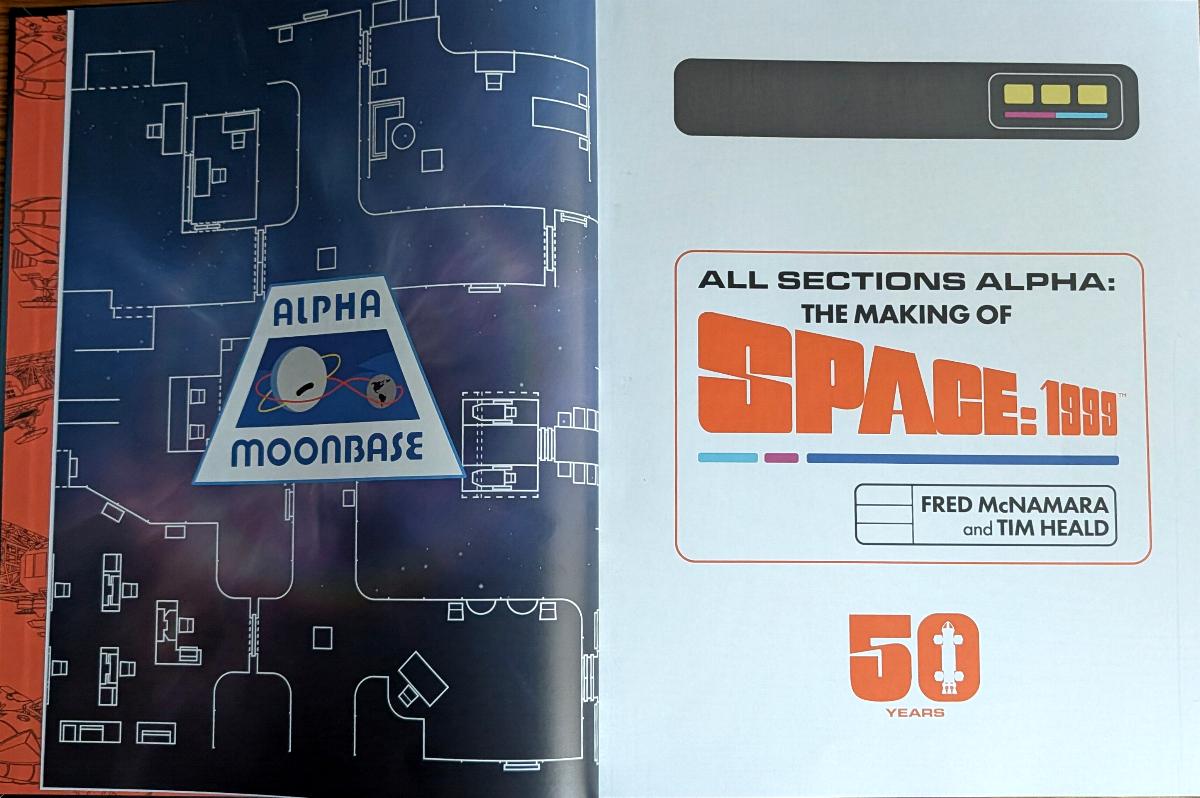
The famous Year 2 set plan in the original photo section is partially used on pages 2 and 344 with a graphic over it (and in the background of the cover image), and should surely have been included.
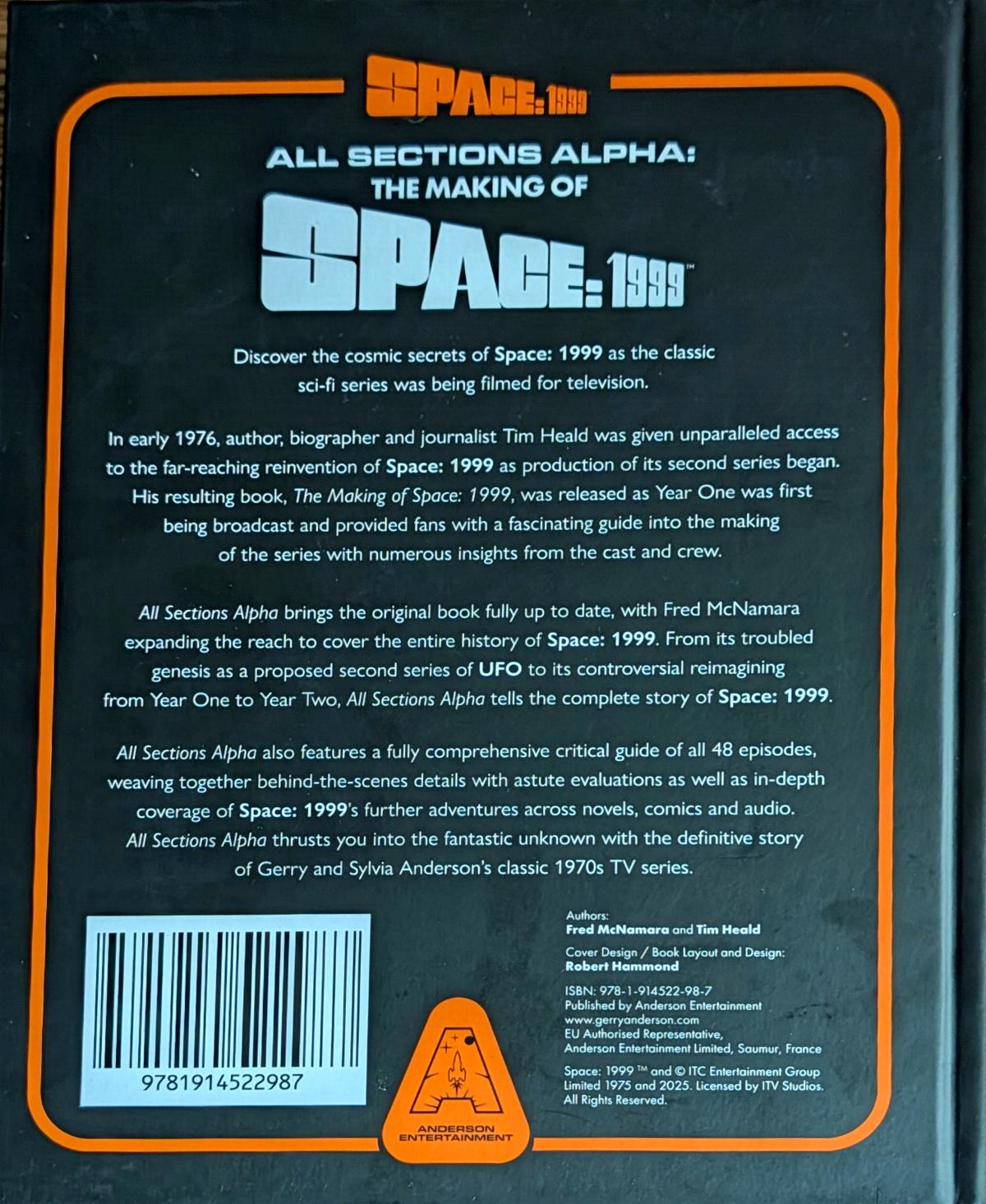
Discover the cosmic secrets of Space: 1999 as the classic sci-fi series was being filmed for television.
In early 1976, author, biographer and journalist Tim Heald was given unparalleled access to the far-reaching reinvention of Space: 1999 as production of its second series began. His resulting book, The Making of Space: 1999, was released as Year One was first being broadcast and provided fans with a fascinating guide into the making of the series with numerous insights from the cast and crew.
All Sections Alpha brings the original book fully up to date, with Fred McNamara expanding the reach to cover the entire history of Space: 1999. From its troubled genesis as a proposed second series of UFO to its controversial reimagining from Year One to Year Two, All Sections Alpha tells the complete story of Space: 1999.
All Sections Alpha also features a fully comprehensive critical guide of all 48 episodes, weaving together behind-the-scenes details with astute evaluations as well as in-depth coverage of Space: 1999's further adventures across novels, comics and audio. All Sections Alpha thrusts you into the fantastic unknown with the definitive story of Gerry and Sylvia Anderson's classic 1970s TV series.
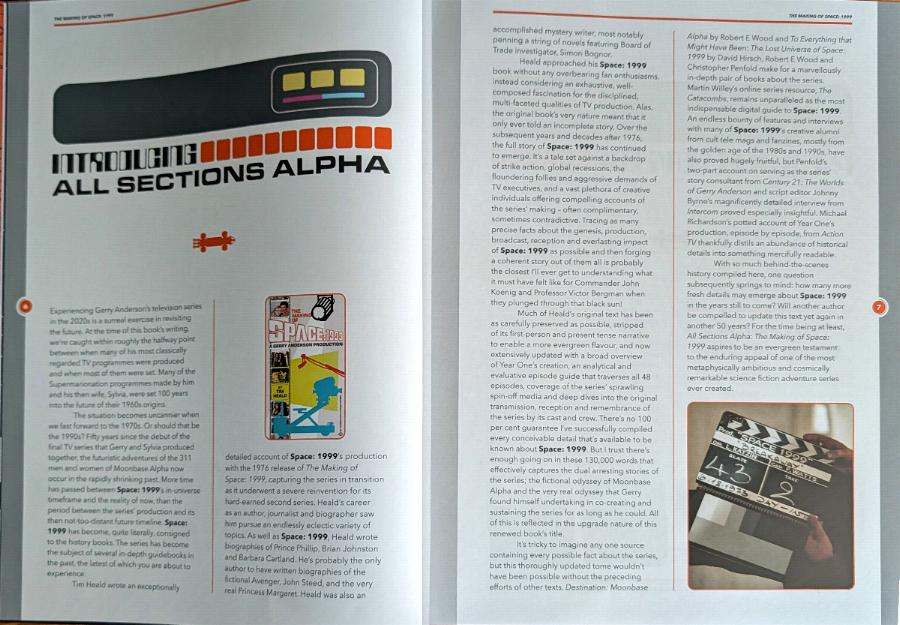
The narrative relies very heavily on quotes, which as it sometimes notes are problematic. They come from interviews many years later, and are sometimes contradictory. Memories fade, stories get distorted as they are retold, and each person portrays themselves in the best light. There is some reference to production documentation, mostly from the Catacombs; oddly To Everything That Might Have Been is only mentioned in the introduction, while Wood's earlier Destination Moonbase Alpha is a main source. In evaluating different quotes, the text sometimes makes the history more muddied, when reading between the lines provides a more straightforward explanation.
There is nothing based on secondary sources. Background and context is notably missing, for instance how ITC operated, their relationship to Italy's RAI, why Elstree was in trouble, the 3-day week in early 1974 and so on.
Some of the quotes lead the text into wrong statements. It starts early with a Gerry Anderson quote on page 9 about Star Trek which has multiple errors and really should have been corrected (the worst being that studio Desilu was sold to broadcaster NBC, when it was actually another larger studio, Paramount). There are repeated references to Bellak writing a 90-minute script for Breakaway, and the mythical 2 hour assembly cut of the episode (at least the latter has a caveat in footnotes, although the Catacombs and "To Everything" have verified a 72 minute length).
Some of the interpretation is dubious, particularly the account of Katzin's "overzealous approach". There are odd errors, including that there were two 44 inch Eagles, not three. One stunning piece of new information is that Michael Douglas played Etrec in Mark of Archanon (p271); the star of The Streets of San Francisco was completely unrecognisable in the role.
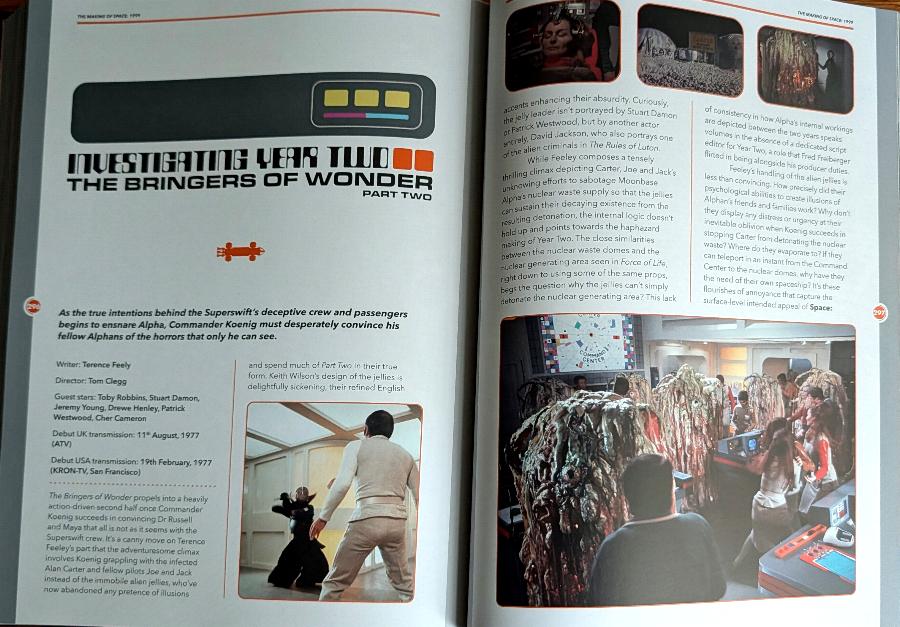
The episode discussions are mostly thematic, assuming the reader is very familiar with the material. There is some production background, drawing again on quotes and primary sources, but it is not in depth.
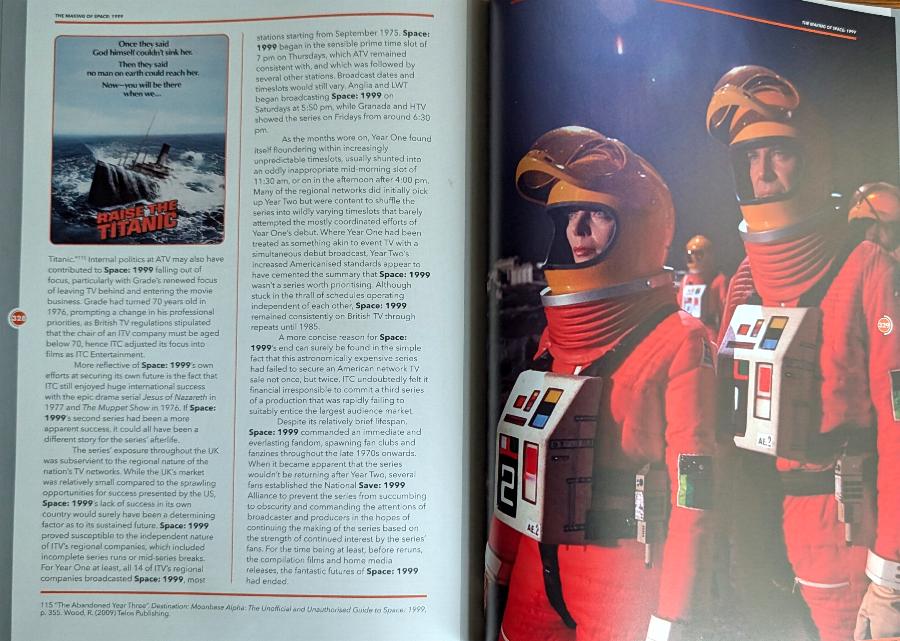
The series broadcast history is short but mostly accurate. Yes, that's the poster for Raise The Titanic there, but while the quotes should have been debunked here, the author correctly points to other factors, and ITC's continued investment in television series. There's much more to this story, however.
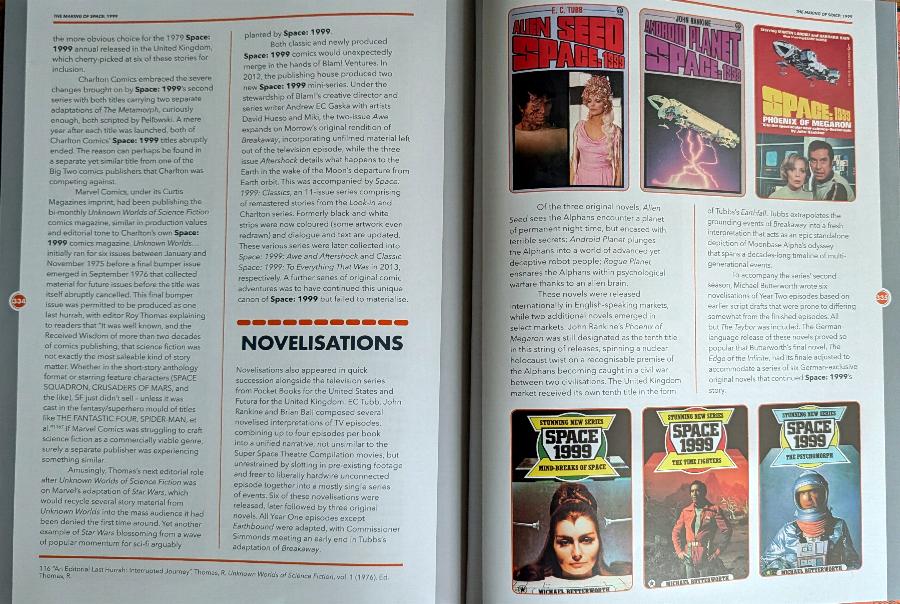
The comics and book history is rapid and superficial, but this is forgivable when there is much more detailed analysis elsewhere, not least the Anderson Comic Anthology.
The book is attractively laid out with colour photographs, some full page. Apart from some montages, there doesn't seem to be anything new here. Overall, it is handsome, but doesn't reach the standards of The Vault by Chris Bentley as a visual guide, or a the levels of analysis of that book or To Everything That Might Have Been.
Copyright Martin Willey